
Outdoor activities are growing in popularity among adventure and exploration enthusiasts. Among these, water hiking and canyoning are attracting more and more participants seeking a refreshing escape, spectacular scenery, and immersive experiences in the heart of rivers and gorges.
These two sports are often confused because they take place in similar environments and involve moving through the water. However, they differ significantly in terms of technical skill, equipment, level of commitment, and the sensations they provide.
Whether you’re planning a vacation in Corsica or simply want to try a new outdoor activity, understanding the unique features of each will help you choose the experience that best suits your interests and skill level.
Discover the world of outdoor water activities
Two sports played in the same setting
Water hiking and canyoning typically take place in rivers, gorges, or steep-sided valleys. Participants make their way downstream, discovering landscapes that are often inaccessible via traditional trails.
This geographical proximity explains why these activities are often grouped together. However, when considering the difference between canyoning and water hiking, several factors clearly distinguish them. The differences between canyoning and water hiking mainly concern the technical level, the equipment used, and the physical intensity required.
These two activities are particularly popular in iconic natural sites such as the Gorges du Verdon, the Grand Canyon du Verdon, the valleys of Corsica, and certain routes inspired by caving and exploration in the great outdoors.
An exclusive journey through rivers and canyons
In both cases, participants enjoy a unique experience in close contact with nature. Natural pools, waterfalls, crystal-clear pools, and rock formations create a particularly appealing setting for outdoor enthusiasts.
Whether on a water hike through the gorges or a full-fledged canyoning adventure, participants make their way through unspoiled natural environments where water has carved out spectacular landscapes. This constant immersion in the aquatic environment is one of the main attractions of both activities.
Water hiking: a gentle way to explore rivers
An activity accessible to as many people as possible
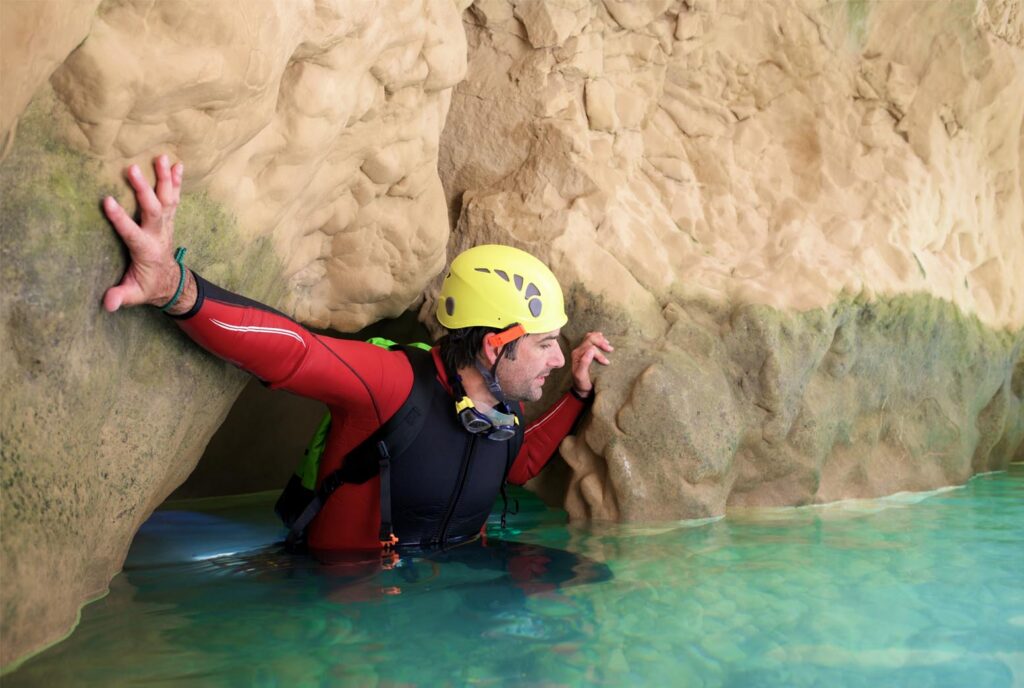
Water hiking involves moving along a river by alternating between walking, swimming, and navigating small natural obstacles. Unlike canyoning, it generally does not require any rope techniques or rappelling.
Often called “water hiking,” this activity appeals to people who want to explore waterways in a fun way. Participants move along on foot or by swimming, sometimes floating in the deeper sections. This activity is very accessible to children, making it an excellent choice for a family vacation or a trip with friends in Corsica.
A journey focused on exploration and enjoyment
The main goal of a water hike is to enjoy the natural surroundings while moving through the water. Participants move at their own pace and take the time to observe the surrounding landscapes, wildlife, and flora.
Unlike the more athletic form of canyoning, water hiking emphasizes contemplation and exploration. Participants learn to make their way gently down waterways, without any major technical obstacles or vertical climbs.
Canyoning: a more technical and demanding activity
A Journey Through Natural Obstacles
Canyoning goes far beyond simply walking in a river. Participants must climb over waterfalls, rappel down cliffs, jump into pools, and slide down natural water slides formed by erosion.
To go canyoning, you often need to use a harness, ropes, and various pieces of safety equipment. Depending on the route, you may sometimes have to rappel down waterfalls or navigate more technically challenging rocky sections.
Canyoning in southern Corsica takes place in canyons that have been specifically developed for this purpose or are recognized for their natural features. Each canyoning route has its own level of difficulty.
A sport that combines adventure and thrills
Canyoning appeals to those who love challenges and adrenaline. Vertical sections, jumps, and rappels provide a unique thrill while requiring greater technical skill.
This sport generally requires good physical fitness in order to navigate the various obstacles. Good physical fitness makes it easier to handle long stretches in the water, approach climbs, and technical descents.
The Main Differences Between Water Hiking and Canyoning
The level of technical complexity
The main difference between canyoning and water hiking lies in the technical difficulty. Water hiking generally does not require any specific training.
In contrast, while both canyoning and water hiking involve walking through water, canyoning often requires the use of a harness, lanyards, and safety techniques. Participants may need to perform more complex maneuvers and navigate obstacles that require professional guidance.
Physical intensity and commitment
Among the differences between these two activities, physical exertion plays a significant role. Water hiking remains accessible to a wide audience, while canyoning requires greater endurance, balance, and coordination.
Depending on the route, you may need to be in good physical condition to participate in canyoning, especially on the more challenging routes.
The Sensations We Seek
Those who enjoy exploring generally prefer water hiking for its fun and contemplative aspects. People seeking adventure, the challenge of pushing their limits, and thrills are more likely to turn to canyoning.
When choosing between water hiking and canyoning, it ultimately comes down to the kind of experience you’re looking for: a leisurely exploration or a sporty adventure.
What equipment is needed for each activity?
Equipment Used in Water Hiking
Water hiking requires relatively lightweight gear. A wetsuit, a helmet, and appropriate footwear are generally all you need to move comfortably in waterways.
The lack of technical equipment helps make the activity more accessible to beginners.
Specialized Canyoning Equipment
Canyoning requires a more comprehensive set of equipment, including a harness, a chest harness, lanyards, carabiners, and sometimes specialized gear for rappelling.
This equipment allows you to navigate obstacles safely and is one of the main differences between water hiking and canyoning.
Which activity should you choose based on your profile?
For a family outing or a first visit
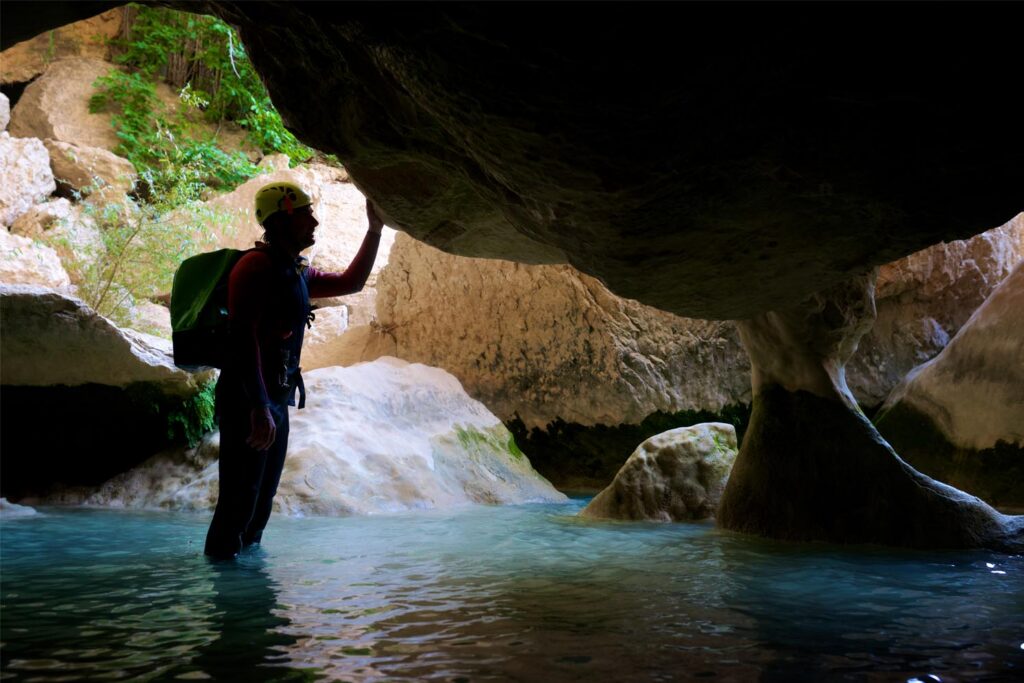
Water hiking is often the best choice for families or people new to outdoor water activities.
It allows you to enjoy the rivers and scenery without any major difficulty, while having a fun and friendly experience.
For lovers of adventure and challenges
For those seeking more action and thrills, canyoning offers a more well-rounded experience. Abseiling, jumps, and technical sections make for a particularly rewarding adventure.
This sport also offers the chance to explore spectacular natural sites that are rarely accessible otherwise.
Why are these activities particularly popular in Corsica?
An island shaped by mountains and rivers
Corsica offers an exceptional setting for canyoning and some of the most beautiful water hikes. Its granite terrain, steep-walled valleys, and crystal-clear rivers create ideal conditions for these outdoor sports.
The Bavella, Asco, and Verghellu mountain ranges are among the most famous spots on the island for canyoning and water hiking.
A variety of courses for all skill levels
Corsica’s diverse terrain offers everything from family-friendly routes to more challenging descents. This variety explains why enthusiasts often find themselves torn between canyoning and water hiking when planning their vacations in Corsica.
Just like famous destinations such as Castellane and the Gorges du Verdon, Corsica offers a wide range of activities, ensuring that everyone can find a route suited to their skill level and preferences.
Although both are practiced in similar environments, water hiking and canyoning cater to different interests. The former emphasizes discovery, relaxation, and a gentle exploration of rivers, while the latter focuses on adventure, technical skill, and thrills.
The choice depends primarily on your skill level, your physical condition, and the kind of experience you’re looking for. In any case, both activities offer an exceptional immersion in stunning natural landscapes and allow you to explore the rivers in a whole new way.
FAQ
Is water hiking easier than canyoning?
Yes, water hiking is generally more accessible. It doesn’t require rappelling or any rope techniques, making it an ideal activity for beginners and families.
Do you need to know how to swim to participate in these activities?
Comfort in the water is strongly recommended for both disciplines. Some sections involve swimming in pools or crossing deeper areas.
Is canyoning dangerous?
When led by a certified and experienced guide and using the proper equipment, canyoning is a safe activity. Professionals select the routes based on the participants’ skill levels and current conditions.
Can you go water hiking with children?
Yes, many courses are specifically designed for families. They allow children to explore the aquatic environment in a fun and safe setting.
What activity should you choose for your first time?
For a gentle introduction to the sport, water hiking is often the best option. However, those looking for a more thrilling experience can opt for a beginner-level canyoning trip led by a professional.